In 1865, a Mississippi steamboat exploded, killing more Americans than the Titanic yet hardly anyone remembers it. Packed with Union soldiers finally heading home from brutal prison camps, the Sultana should have been a celebration of survival. Instead, it became America’s forgotten disaster. Well, here’s my take on this story, and why it deserves to be remembered.
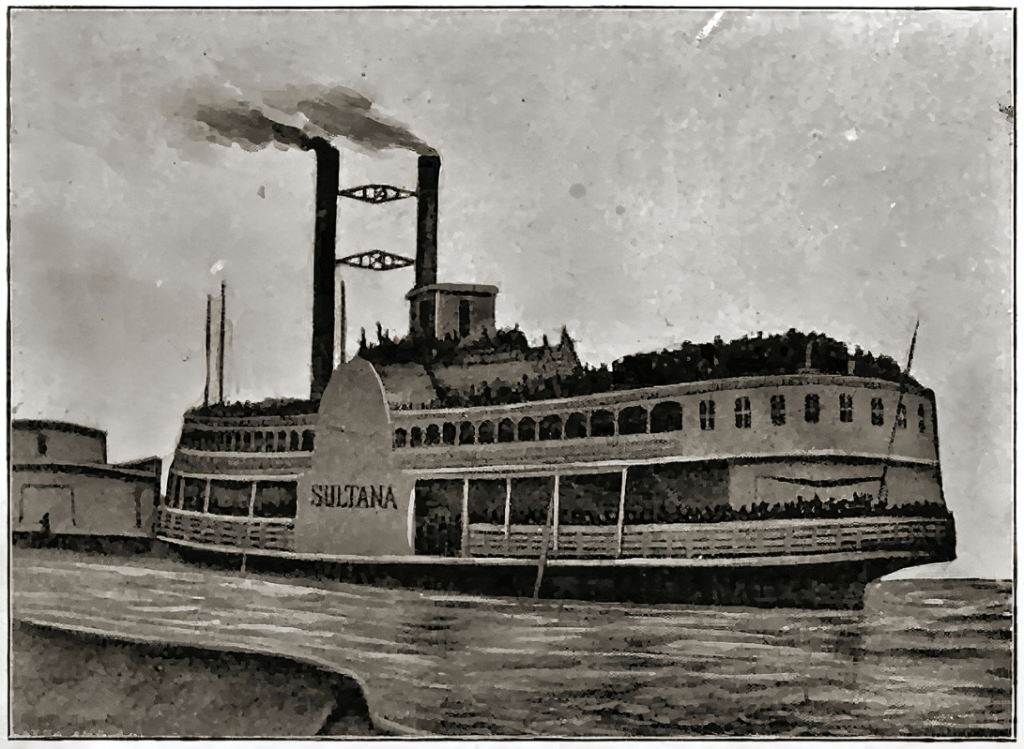
In April of 1865, just weeks after the Civil War ended, the Mississippi River became the stage for one of the worst, and least remembered tragedies in American history.
A wooden steamboat named the Sultana, legally licensed to carry fewer than 400 people, was stuffed with over 2,000 Union soldiers, civilians, and crew. Most of the men were freshly freed prisoners of war, finally on their way home after months of starvation and sickness in Confederate prison camps. I cannot fathom the thoughts of thinking you were home free, just to be met with this fate.
The Sultana was built in 1863 and normally hauled cargo and passengers up and down the river. In the spring of 1865, the U.S. government was paying boat captains to move paroled Union POWs north $5 for each enlisted man and $10 for each officer. That might not sound like much, but to struggling captains it was a fortune. (At the time $5 was $99 and some change) Well, here comes James Cass Mason, the Sultana’s 34-year-old captain, who was already struggling due to his own financial demise. At Vicksburg Mississippi, Mason made a deal with corrupt Union quartermaster Reuben Hatch. Here’s the plan: overload his boat with men, split the profits, and nobody would ask too many questions.
That deal turned sour and deadly fast. The Sultana was legally allowed to carry 376 people, but by the time it left Vicksburg, it had roughly 2,100 men onboard, packed shoulder to shoulder on every deck. Survivors later described the boat as so heavy it seemed ready to roll with every turn of the river. To make matters worse, the Sultana had a leaking boiler. Instead of doing a full repair (which would have delayed departure and risked losing the lucrative contract) the engineers patched it quickly (cannot forget incorrectly), and set off.
Around 2 a.m. on April 27, 1865, North of Memphis, three of the ship’s four boilers exploded. The blast tore through the center of the vessel, throwing men and ship debris into the dark and quiet water. The decks were wooden, so they caught fire instantly, and with the pilothouse destroyed, the burning wreck drifted helplessly downriver. Many soldiers, already weakened from prison camps, stood no chance against the cold Mississippi River. Some drowned, others burned, and a few clung to floating wreckage until rescue boats and Memphis locals pulled them from the water.
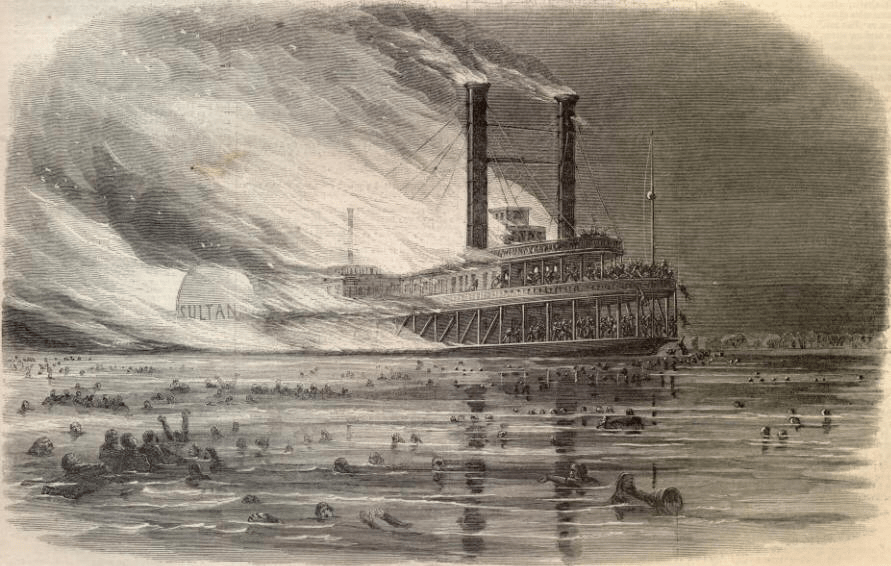
The scale of the disaster is still unknown. The ship was so full, they never had a final number of passengers. A list of names on board either was never made or didn’t make it from the explosion. Somewhere between 1,100 and 1,200 people died, making the Sultana explosion the deadliest maritime disaster in U.S. history, worse even than the Titanic fifty years later. But unlike the Titanic, the Sultana was quickly forgotten. Why? Timing. Just weeks earlier Abraham Lincoln had been assassinated, and on April 26, one day before the explosion, John Wilkes Booth was killed. The newspapers were consumed with those headlines, and the story of over a thousand dead soldiers barely made a ripple outside the region.
So who was Captain James Cass Mason? He wasn’t a villain in the Hollywood movie sense, but he was a man cornered by money troubles. Born in 1831, he had spent his life on the rivers, working his way up from clerk to steamboat captain. He even married into a steamboat family, but by 1865 he was stretched thin financially. When the chance to make easy government money appeared, he grabbed it. Even though his boat was leaking and dangerously overcrowded. Mason died in the explosion, so he never had to answer for the deal he made. The quartermaster, Hatch, escaped punishment too, thanks to political connections in Washington.
Rescue efforts were chaotic but heroic. Memphis residents rushed to the riverbanks, pulling half-dead men from the water, caring for the burned, and filling churches and hospitals with survivors. Bodies were first buried near the wreck site and later reburied in Memphis National Cemetery, where the dead of the Sultana still rest. Survivors formed associations and held reunions well into the 20th century, determined to keep the memory alive even as the nation moved on.
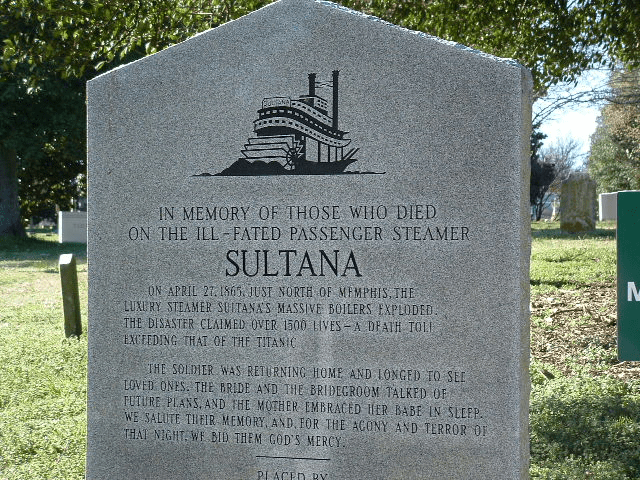
A Sultana Disaster Museum now stands in Marion, Arkansas, just across the river from the wreck site. Historians and descendants still fight to make sure the story isn’t lost again. The Sultana reminds us how easily greed, corruption, and poor choices can turn deadly, and how history often overlooks even the worst tragedies when the headlines are crowded.
The Sultana wasn’t just a steamboat. It was a floating keg of human desperation, greed, and bad timing. It blows my mind that the deadliest maritime disaster in U.S. history barely makes it into our history books.
If you hadn’t read this, would you have ever heard of the Sultana?


 Wandering Abigail
Leave a reply to BlessedNana900 Cancel reply